


THE BASIC NEEDS OF THE NEWBORN
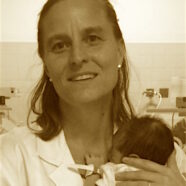
Listening at the Threshold of Life There is a moment, just after birth, when everything is still tender, open, and profoundly alive. The newborn is adapting to life outside the womb.The mother is adapting to life with her baby in her arms.Both are exquisitely sensitive to their surroundings. How we meet this moment matters. The first hours and days after birth are not simply a time of transition; they are a time of imprinting. What is felt, sensed, and experienced here echoes forward: into bonding, regulation, health, and our capacity to meet the world. When we speak about the basic needs of the newborn, we are not speaking about techniques or protocols. We are speaking about conditions. About atmosphere. About the quality of presence offered around new life. In this reflection, we turn toward a simple yet radical orientation:zero separation and zero interruption. ––––––––– LISTENING THROUGH THE LENS OF MONTESSORI AND ODENT Looking through the lens of Maria Montessori and Michel Odent, we are invited to reconsider what care truly means in the earliest moments of life. Montessori understood that birth and early life must be protected, not managed. She spoke about the newborn as a “spiritual embryo,” a being in a profound state of formation, deeply affected by the environment into which they arrive. Privacy, warmth, continuity, and calm were not luxuries, but basic needs. Michel Odent later articulated this understanding through the language of physiology and Primal Health. He showed how early experiences shape the interaction between the primal brain, the hormonal system, and the immune system: systems that guide us for a lifetime. High levels of stress and interruption in the early hours after birth can have lasting effects on bonding, regulation, and health. Both Montessori and Odent remind us of something quietly challenging:any unnecessary help can become an obstacle. ––––––––– THE NEED FOR SAFETY, SERENITY, AND SILENCE The most fundamental need of the mother and newborn is to feel safe. Safety allows the body to soften.Serenity allows hormones to flow.Silence allows adaptation and bonding to unfold. After birth, both mother and baby are recovering from an immense physiological and emotional passage. They are learning each other. Their senses are heightened. Their nervous systems are open and impressionable. When the space around them is filled with noise, conversation, observation, or subtle interference, energy is pulled outward. When the space is quiet, respectful, and restrained, energy can turn inward: toward healing, connection, and rest. Silence is not emptiness.It is an offering. It allows mother and baby to reconnect after an abrupt separation. From this reconnection, everything else flows. ––––––––– LEARNING WITH KARIN SLABAUGH This work is at the heart of the teaching shared by Karin Slabaugh, who has dedicated her life’s work to studying, guarding, and protecting the newborn. Karin brings together Montessori’s original insights with decades of lived experience and careful observation, bridging traditional wisdom with contemporary understanding. Her work is grounded, humble, and deeply respectful of the newborn as a sensitive, relational being. Karin and I collaborate closely on the Basic Needs of Babies work, and it is a deep honour to walk alongside her in exploring how we meet life at its very beginning. You can learn more about this shared work here:https://www.montessori-for-life.org/the-basic-needs-of-babies/ ––––––––– A QUIET INVITATION When we change how we meet the newborn, we change something fundamental, not only for individual families, but for the wider culture. This reflection is an invitation to listen more closely.To protect the earliest moments of life.And to remember that sometimes the most powerful care we can offer is silence, trust, and reverence. ––––––––– This session is...
Read MoreWhen The Days Feel Full, Go To Nature

When the days feel full, go to nature You should sit in nature 20 minutes every day…Unless you are busy, then you should sit for at least an hour. I have always loved this Zen proverb. It feels simple, almost obvious. And yet, when life gathers momentum, it can be easy to forget. The pull of work, responsibility, and constant communication can draw us into a kind of mental compression. The never-ending hamster wheel of to‑do lists and overflowing inboxes that sometimes feels like opening Pandora’s box. We know we need space, but we tell ourselves we’ll take it later. This week marked my return to work after a month away from my computer, emails, and projects. I was aware, even before opening my laptop, that it might feel like lifting the lid off a bubbling pot of soup, that familiar sense of urgency, the feeling that everything needed attention all at once. Just anticipating it had my nervous system on edge. With it still being summer, and after having spent so much time outdoors over the past month, I decided that before sitting down to work, I would go for a short walk. Nothing ambitious. Just a chance to stretch my legs, walk the dog, and allow my thoughts to arrive gently. That twenty‑minute walk turned into an hour‑long wander down to the bay at low tide… and a spontaneous dip in the ice‑cold Atlantic. Somewhere between the sea air and the shock of cold water, my to‑do list rearranged itself. My body remembered how to settle. My breathing deepened. By the time I returned home and finally opened my computer, I felt resourced rather than overwhelmed. It was a quiet reminder of something I return to again and again in my work: tending to our most basic needs is not optional. It is foundational. Whether we are mothers, birth workers, caregivers, or simply human beings moving through full lives, regulation, safety, and presence are where everything else begins. That morning set the tone for my return and it filled me with renewed excitement for the offerings unfolding within the True Midwifery community. As we begin a new year of Study Spirals, I’m delighted to be welcoming my dear friend and longtime collaborator, Karin Slabaugh, for our first gathering. In this upcoming Study Spiral, we will explore the fundamental needs of the newborn and the delicate unfolding of the mother‑baby relationship in the first hours and days of life. Drawing on the wisdom of Maria Montessori and the insights of Michel Odent, Karin invites us to reflect on how birth and early adaptation shape what is often called Primal Health, the subtle interplay of hormonal, immune, and primal brain systems. Through this lens, we will consider what it means to create environments of zero separation and zero interruption: spaces where the newborn’s deep need for safety and serenity can unfold naturally, and where the quiet presence of attendants allows mother and baby to reconnect and begin life together in peace. If you are interested and would like to learn more about this upcoming spiral, and the programme for 2026 see HERE These reflections are not only about birth. They speak to a wider truth: that life thrives when we slow down, listen closely, and protect the conditions that allow connection to emerge. As I move back into work this year, I’m holding that morning by the sea as a compass. When the days feel full, go to nature.When the mind feels loud, return to the body.And when in doubt, tend first to what is most basic. With...
Read MoreMy Birthday and Surrender

Yesterday was my birthday—my 45th trip around the sun—and I find myself reflecting on presence and surrender. A few weeks ago, I took a bad tumble and hurt my foot. All my plans for hiking and walking with my family during the school holidays went out the window. Instead, I found myself mostly on the couch—delegating, surrendering. At first, I was frustrated. There’s only so much scrolling and streaming one can do (and there is a LOT of boring content out there!). Eventually, I had to shift. I surrounded myself with my guitar, art supplies, and writing materials. I learned new songs, made some jewellery, sketched still lifes, and wrote—a lot. Sometimes, when we can’t “do,” we’re given a chance to receive. And in that stillness, long-dormant creativity can rise again. I was finally back on my feet last week, and I relished the return of my walks. It’s winter here, and after the rains, everything is so green. The Aloes and Coral trees are in bloom—the fiery reds and oranges popping against the fresh green backdrop. Then yesterday—on my birthday—I surrendered again, this time to the flu that’s been making its way through my household. Apparently, the lessons of surrender aren’t quite over yet. So I write to you from bed, reflecting on all that this next chapter of life is asking me to let go of… and receive. Upcoming Offerings Study Spiral with Robyn SheldonConnect with the soul of the unborn child in this sacred, interactive circle.Thursday 31 July | 11:00–14:00 SASTBook your spot here Early Bird Ends 31 July – Two Signature Courses:Birth First Aid for Mother & Baby (starts 2 Sept)For midwives, doulas, and birthkeepers—practical, respectful responses to real-life birth situations.Enroll here Basic Needs of Babies (starts 30 Sept)A Montessori-informed exploration of newborn care for parents and professionals alike.Join the course Self Sufficiency in ChildbirthA 4-week journey for couples preparing for conscious, autonomous birth.16, 23, 30 October & 6 November | 18:30–21:00 SASTReserve your...
Read MoreThe Basic Needs of Babies – a Time to Slow Down

In our fast-paced world, the arrival of a newborn offers an invitation to pause, reconnect, and reflect on what these smallest humans truly need from us. Maria Montessori spoke of the spiritual embryo, a phase of human development that is as significant as the physical growth within the womb. She believed that after birth, the newborn still requires a special, nurturing environment — animated, loving, warm, and rich with nourishment — where everything is done to accommodate, and nothing to hamper their development. This is the heart of The Basic Needs of Babies course and workshop. Designed for parents-to-be, new parents, grandparents, educators, health professionals, midwives, doulas, and birth attendants, this online course is a space to explore how we can gently and practically meet the fundamental needs of newborns. Whenever we gather to run this course, I am deeply moved by how it becomes a true time of deepening. Together, we slow down and become more present — for ourselves, for one another, and most importantly, for the babies arriving in our world. Course topics include:– Understanding the spiritual embryo and our responsibility in nurturing the newborn’s inner world– Creating a sense of belonging and authentic connection for newborns and families– Learning from pioneers such as Maria Montessori, Adele Costa Gnocchi, Frédérick Leboyer, Michel Odent, and Nils Bergman– Exploring the basic needs of mothers in labour and the newborn child– Becoming fluent in the language of newborns through behaviour and subtle cues– The neuroscience of connection and secure attachment This is a time to pause, to listen, and to remember what the youngest humans need to feel safe, seen, and welcomed into the world. The Basic Needs of Babies Course runs from 30 September 2025 to 21 April 2026, with an early bird discount available until 31 July 2025. Click here to book your...
Read More