


THE BASIC NEEDS OF THE NEWBORN
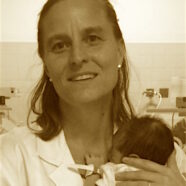
Listening at the Threshold of Life There is a moment, just after birth, when everything is still tender, open, and profoundly alive. The newborn is adapting to life outside the womb.The mother is adapting to life with her baby in her arms.Both are exquisitely sensitive to their surroundings. How we meet this moment matters. The first hours and days after birth are not simply a time of transition; they are a time of imprinting. What is felt, sensed, and experienced here echoes forward: into bonding, regulation, health, and our capacity to meet the world. When we speak about the basic needs of the newborn, we are not speaking about techniques or protocols. We are speaking about conditions. About atmosphere. About the quality of presence offered around new life. In this reflection, we turn toward a simple yet radical orientation:zero separation and zero interruption. ––––––––– LISTENING THROUGH THE LENS OF MONTESSORI AND ODENT Looking through the lens of Maria Montessori and Michel Odent, we are invited to reconsider what care truly means in the earliest moments of life. Montessori understood that birth and early life must be protected, not managed. She spoke about the newborn as a “spiritual embryo,” a being in a profound state of formation, deeply affected by the environment into which they arrive. Privacy, warmth, continuity, and calm were not luxuries, but basic needs. Michel Odent later articulated this understanding through the language of physiology and Primal Health. He showed how early experiences shape the interaction between the primal brain, the hormonal system, and the immune system: systems that guide us for a lifetime. High levels of stress and interruption in the early hours after birth can have lasting effects on bonding, regulation, and health. Both Montessori and Odent remind us of something quietly challenging:any unnecessary help can become an obstacle. ––––––––– THE NEED FOR SAFETY, SERENITY, AND SILENCE The most fundamental need of the mother and newborn is to feel safe. Safety allows the body to soften.Serenity allows hormones to flow.Silence allows adaptation and bonding to unfold. After birth, both mother and baby are recovering from an immense physiological and emotional passage. They are learning each other. Their senses are heightened. Their nervous systems are open and impressionable. When the space around them is filled with noise, conversation, observation, or subtle interference, energy is pulled outward. When the space is quiet, respectful, and restrained, energy can turn inward: toward healing, connection, and rest. Silence is not emptiness.It is an offering. It allows mother and baby to reconnect after an abrupt separation. From this reconnection, everything else flows. ––––––––– LEARNING WITH KARIN SLABAUGH This work is at the heart of the teaching shared by Karin Slabaugh, who has dedicated her life’s work to studying, guarding, and protecting the newborn. Karin brings together Montessori’s original insights with decades of lived experience and careful observation, bridging traditional wisdom with contemporary understanding. Her work is grounded, humble, and deeply respectful of the newborn as a sensitive, relational being. Karin and I collaborate closely on the Basic Needs of Babies work, and it is a deep honour to walk alongside her in exploring how we meet life at its very beginning. You can learn more about this shared work here:https://www.montessori-for-life.org/the-basic-needs-of-babies/ ––––––––– A QUIET INVITATION When we change how we meet the newborn, we change something fundamental, not only for individual families, but for the wider culture. This reflection is an invitation to listen more closely.To protect the earliest moments of life.And to remember that sometimes the most powerful care we can offer is silence, trust, and reverence. ––––––––– This session is...
Read MoreReflections on Our Study Spiral Honouring Michel Odent

Last week’s Study Spiral, Peace on Earth Begins at Birth, was one of those gatherings that quietly settles into the bones. Days later, I am still carrying the tenderness and the sense of profound connection that arose as we came together to honour the life and legacy of Michel Odent, a man whose work has shaped, guided, and challenged so many of us walking the path of True Midwifery. There are moments in this work that feel like thresholds, where something subtle shifts in the collective field. This Spiral felt like one of them. A Visit From Liliana The most moving part of our time together was the presence of Liliana, Michel’s partner in life, birth, and death. With an honesty that was both steady and fragile, she shared a recent birth she attended, a story woven with sensitivity, intuition, and that unmistakable presence of someone who has lived and breathed birth for decades. She also spoke about the tenderness of Michel’s passing, her own grieving, and the intimacy of accompanying someone you have walked beside for so long. Her words did not come as teaching, but as transmission: a kind of living echo of Michel’s essence. We became, without needing to try, a circle of elephants, quietly standing with her, holding her experience, her remembering, and her love. In that moment, the Spiral became what it always hopes to be:a place where wisdom meets humanity, and where our collective holding becomes a form of care. The Lineage of Love and Attention One of Michel’s most important teachings — and one Liliana echoed — is this: “Birth is a story between two people — the mother and the baby.” It’s such a simple sentence. And yet, in a world where birth has become increasingly technologised, politicised, and crowded with opinions, this truth feels more radical than ever. The mother.The baby.Two nervous systems finding each other.Two bodies completing an ancient dance. Everything else is secondary. Our Spiral felt like a return to that simplicity, not in a nostalgic way, but in a deeply embodied, grounded way. A remembering of what is actually essential. Continuing Michel’s Care After the session, I reached out to thank Liliana and asked whether there was a charity or cause that reflected Michel’s values, something to which we could donate the proceeds of the gathering. Her answer surprised me with its sweetness. She told me that Michel had always been especially protective of the birds and squirrels in their neighbourhood in London. Feeding them was a daily ritual of kindness. She still continues this small act on his behalf. She suggested we donate to London Wildlife Protection, a local organisation that cares for urban wildlife. And so, in honour of Michel, that is exactly what we will do. I find something beautiful in this:that our Spiral community, gathered in his name, will help feed the birds and squirrels he loved. A simple, humble continuation of his care. An Invitation Into Our Final Spiral of 2025 As we close this year of Study Spirals, a year rich with learning, remembering, and returning to the roots of our craft, we have one final gathering remaining. And it is a special one. Closing the Bones with Jodi Jade In December, we welcome Jodi Jade, who will guide us into the lineage, history, and deeper purpose of the Traditional Mexican Closing of the Bones ceremony. This Spiral will be an exploration of: the origins of the Rebozothe wisdom of rites of passagehow ritual restores what modern life often fracturesthe variations and deep healing potential of Closing the Bonesand the essential elements of postpartum care and community holding It feels like...
Read MoreCarrying the Thread: A Soft Tribute to Michel Odent

As I prepare for my talk this coming Thursday, Peace on Earth Begins at Birth — Honouring the Work and Legacy of Michel Odent with Ruth Ehrhardt and Clara Scropetta, alongside my friend Clara Scropetta, I am filled with tender emotion.
Read MoreThe Women Behind The Upcoming Silent Birthkeeper
As we prepare for the next journey of The Silent Birthkeeper — beginning February 2026 — I’d like to take a moment to honour and introduce the three women who will be holding and guiding this circle: myself, Lana Petersen, and Samara Hawthorn. Each of us comes to this work through our own lived experience, ancestry, and path of learning. Together, we share a devotion to birth, to silence, and to the remembrance of what it means to walk gently with life. RUTH EHRHARDT Traditional Birth Attendant, Midwife, Educator, Author, and Founder of True Midwifery My journey as a birthkeeper has been shaped by my lineage, by the women who came before me, and by the births of my own four homeborn children. I am a Certified Professional Midwife (CPM), Traditional Birth Attendant, and author of The Basic Needs of a Woman in Labour, a small book rooted in the understanding that when we protect the hormonal flow of birth, we protect humanity itself. For me, The Silent Birthkeeper is a space of remembering — a weaving of story, science, and soul. It continues to remind me that birth, in its simplicity, holds the power to transform. LANA PETERSEN Traditional Birth Attendant, Doula, and Founder of Lalilu Doula Services Lana and I have journeyed alongside one another for many years — through births, gatherings, and shared work within the birth community of South Africa. With over two decades of experience, she brings a grounded and compassionate presence to the families she supports. Lana’s work centres around physiological birth, self-responsibility, and trust in the innate intelligence of women and their bodies. She co-founded Home Birth South Africa in 2010, creating a vital community space for connection, education, and support. Her way of holding space is gentle yet firm — rooted in respect and a deep faith in the power of birth as initiation. SAMARA HAWTHORN Grandmother, Elder, and Founder of WellMama CIC Samara joins us from the UK, bringing nearly three decades of experience in traditional birthkeeping, herbalism, and rites of passage. As the founder of WellMama CIC, she has guided hundreds of mothers, families, and birthworkers through the seasons of womanhood, always grounded in ancestral remembrance and reciprocity with the land. Her work weaves together earth-based living, midwifery skills, and ceremonial practice — reminding us that tending to birth is part of tending to life itself. Together The three of us come together in this work through friendship, respect, and a shared love for women, babies, and birth. Our collaboration is not about teaching from the top, but about listening — to one another, to the women who gather, and to the silence that guides us all. It is a privilege to journey alongside one another and with the women who continue to answer the call of The Silent Birthkeeper. The Silent Birthkeeper 2026 begins 5 February 2026 – 11 February 2027.Only a few spaces remain for this intimate one-year immersion. Join The Silent Birthkeeper 2026...
Read MoreThe Silent Birthkeeper – The Art of Honouring Silence in Birth

“It will take a long time to rediscover the importance of silence and to accept that the dominant quality of a midwife should be her capacity to keep her mouth shut.”— Michel Odent, The Functions of the Orgasms (2009) I laughed out loud when I re-read these words from Michel recently. It felt as though he was shouting from beyond the grave — reminding us again of the impossible simplicity of creating the optimal environment for birth. He is, of course, speaking about the basic needs of the labouring woman, and how to create the ideal conditions for oxytocin to flow freely. Silence, a key component, connects to the understanding that when in labour, stimulating a woman’s neocortex (her thinking brain) will only “wake her” from the primal mammalian state needed for the rich cocktail of hormones to flow — allowing pure physiology to unfold. “You cannot manage an involuntary process, the point is not to disturb it.” Why do I call this an impossible simplicity? Because we humans love to talk. Even if we understand in theory that birth unfolds best in silence, it is difficult in practice. Whether to ask practical questions like: “How long since your waters broke?”“When did labour start?”“How far apart are the contractions?” Or to offer words of comfort like: “You’re doing so well.”“You can do this.” Each of these requires the mother to leave her primal state and re-engage her thinking brain. An important practice of true midwifery is therefore to learn to say little to nothing in the birthing space — unless it is truly required. The Basic Needs of a Woman in Labour To feel safeTo switch off the neocortex (thinking brain)SilenceDarknessNot feeling observedWarmthLow levels of adrenaline When these needs are honoured, the result can be the foetus ejection reflex — the natural, undisturbed unfolding of birth. Michel reminds us: “From a practical perspective we are now in a position to present authentic midwifery as the art of creating the conditions for a foetus ejection reflex.” Why The Silent Birthkeeper? The Silent Birthkeeper is a one-year journey into True Midwifery. It is for those who feel the quiet calling in their bones — who know there is more to birthwork than protocols and procedures, and who long to sit at the edges of birth, holding space with reverence, humility, and trust. Over 12 months, we will walk together through presence, knowledge, and practice — exploring the basic needs, the art of listening, self-care and community care, storytelling, ceremony, and the foundations of midwifery. This is not a course, but a year-long initiation — a space to soften, listen, and remember. Join the Circle The Silent Birthkeeper runs from 5 February 2026 – 11 February 2027.Bookings are now open, with early bird pricing until the end of November. Learn more and book your place...
Read MoreWhat Does It Mean to Be a Midwife Today?
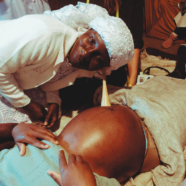
I’ve been travelling and mostly unplugged these past weeks, but I keep dipping back into the True Midwifery online community to feel its pulse. And every time, I’m reminded how rare it is to find a space that runs on love, trust, and discernment. It’s not that we all agree. Far from it. We come from different trainings, traditions, and ways of working. But there’s a deep respect for one another’s paths — and in the birth world, that’s something precious. Lately, our upcoming Study Spiral has stirred up some big feelings for me around the topic of modern-day witch hunts. And I keep coming back to this: so often, they are about women not trusting each other. Turning on each other to feel safe, or to keep our footing in a system that doesn’t truly support us. In birth work, it’s the same old pattern — patriarchy’s favourite trick: divide and rule. The Splintering of Our Roles One way this shows up is in the way we’ve created countless “safe” titles so we can be allowed to serve mothers and babies. Birthkeeper. Doula. Traditional Birth Attendant. Once, all of these roles were simply what it meant to be a midwife — a person who stood beside the mother and baby through the threshold of birth. Now, we’ve been split and split and split again. With every division, we’re more restricted, more regulated, more over-specialised… and less able to offer the full, holistic care mothers and babies actually need. A Lesson from the Anamaboya I was reminded of this when I sat with the Anamaboya — the traditional Shona midwives in Zimbabwe. I shared with them the different titles we see nowadays, and they looked at me with quiet confusion, as if I’d just asked for a different word for love, or for water. “What do you call yourselves?” I asked. “Anamaboya,” they said simply. Midwife. Grandmother. Their qualification? Being called to the work by God. A dream.Their gift? Deep humility. Trust in birth. A willingness to learn. The knowledge that their true work is to love the mother. Who Decides? Not long ago, an empirical midwife I met offered me a definition I’ve been holding close: A midwife is a midwife when recognised as such by her community. It’s such a simple sentence, and yet it pulls at so many threads — identity, authority, recognition, belonging. For me, this is not about deciding on one definition. It’s about opening the conversation and letting the questions breathe: Who gets to decide what a midwife is?How does language include… and exclude?And how might our own divisions be keeping us from serving mothers and babies as fully as we could? I’d love to explore these questions together in our upcoming Study Spiral. With love,Ruth Join this month’s Spiral → true-midwifery1.teachable.com/p/true-midwifery-study-spirals Last Spot in the Birth First Aid Course (starting 2...
Read More