


Last Week we Gathered to Chat About Home Birth

We do this every three months here in Cape Town, in a lovely home in the seaside village of Muizenberg. Lana and I have been running these gatherings for the last five years. They were born out of a need and a desperation to provide support and information to those seeking direction and advice around this obscure birthing option and the gatherings have gained a momentum of their own. When we first started them we would work so hard to spread the word, posting flyers to all the midwives and interested antenatal teachers. We would arrange speakers and explore themes. We would advertise and spread the word and we would always lose money running them but loved it and loved the responses and stories we got. They were always worth it. And then something shifted. The gatherings grew. And so did the stories. And the variety and range of people who came. It has become such a safe space to listen and share. Mothers, fathers, doulas, midwives, interested parties attend and all seem to leave humbled and moved. As do we. Every time. Mothers share their birthing experiences, their eyes still glowing with oxytocin. These women, these strong strong women, share what made them feel strong and empowered. They share their vulnerable and beautiful stories to a hungry audience, an audience who needs affirmation and support in the choices they are making. “Stories teach us in ways we can remember. They teach us that each woman responds to birth in her unique way and how very wide-ranging that way can be. Sometimes they teach us about silly practices once widely held that were finally discarded. They teach us the occasional difference between accepted medical knowledge and the real bodily experiences that women have – including those that are never reported in medical textbooks nor admitted as possibilities in the medical world. They also demonstrate the mind/body connection in a way that medical studies cannot. Birth stories told by women who were active participants in giving birth often express a good deal of practical wisdom, inspiration, and information for other women. Positive stories shared by women who have had wonderful childbirth experiences are an irreplaceable way to transmit knowledge of a woman’s true capacities in pregnancy and birth.” – Ina May Gaskin I feel honoured and blessed to be part of these gatherings every three months. I do wish we could run them more often but for now, every three months will have to do. Thanks again to all who come and share....
Read MoreI Never Want to go Near That Hospital Again!

I never want to go near that hospital again! Strong words said by a mother… Then another mother says to me, “There’s no way I’m going to the hospital!” And then another mother says, “I don’t want to go to the hospital for even one check up. Everyone I know ends up with caesareans…” Three different mothers. Three very different scenarios. Three very different backgrounds. Three different belief systems. And yet this very strong underlying feeling from all three. And all in the same week. What do I do? What do I say in these situations? I sit and write this whilst waiting for my students to arrive. I am part of a group of women who teach the 4th and 5th-year medical students ‘compassion’ as part of their obstetric training. It is a programme that was started several years ago by midwife Robyn Sheldon. The students arrive and I put away my pencil and notebook. They are chatting amongst themselves. I hear the words, “I am so tired.” repeated several times. We begin the tutorial by sitting quietly and comfortably in chairs in a circle. The pressure is off and all we need to do is observe our individual breath as it moves in and out of our nostrils. We allow ourselves to just be. We observe or thoughts, emotions and feelings as they arise and drift in and out of us. We note the hustle and bustle taking place around us in the hospital. The clanging. The announcements. The hurried footsteps. The cars in the road outside. We notice these things but each time we go back to our breath, allowing that to be our centre and anchor. After some time, we open our eyes. Now it feels like we have truly arrived. It feels like we are truly present and can now truly see each other. We begin the tutorial by going around the circle and checking in. How has their week been in the labour ward? One by one, we go around the circle and what I hear is distressing story after distressing story. They are exhausted. They feel overwhelmed. They do not like how they are being treated and they cannot bear how the women in labour are being treated. They cannot wait for this part of their training to be over. Some had really looked forward to being in the labour ward and being part of birth and babies, bringing new life into the world. But right now, it feels like a war zone and something they need to get through and survive. I tell them briefly about the blog post I was working on when they came in and the title, I never want to go near that hospital again! I tell them about the three different women who shared these sentiments in three different settings and all in the same week. I say it is a pity because, in an ideal world, these women would live in a society where they could trust and feel supported by the health care system. What has happened when seeking help from places meant to heal and support comes as a last resort? Or is stressful and traumatic? Or something to be avoided at all costs? We discuss this further for some time when one student pipes up, “You can add one more person to your blog post who never wants to go near a hospital again, a fourth-year medical...
Read MoreThis is Marthe and she had a Home Birth…
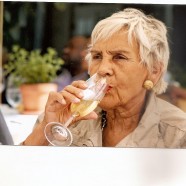
When Marthe was eighteen years old and newly married, she went into labour one Cape Town spring morning. She was living down the road from her Aunty Maggie and Aunty Martha’s house and the two busy body aunties came to see if the pains the expectant mother was complaining about were indeed the pains of labour, they were there to keep the nervous young husband at bay, and to send a young boy to summon the midwife. The local midwife soon arrived on her bicycle and stayed with young Marthe for three days before deciding to send the young woman off to Groote Schuur hospital. The labour was taking too long and the baby was not coming. The midwife was concerned. After three days of labour and after being transferred to the hospital, Marthe gave birth to a skinny little baby girl. The doctors were baffled as to why the tiny girl had taken so long to come. Eighteen months later, Marthe was in labour again. Again she was at home, and again the local midwife joined her. This time the labour seemed to be progressing smoothly and soon Marthe began bearing down. By some strange twist of fate, the house across the road caught alight. While Marthe easily heaved out a large ten-pound baby girl, a woman died as the house opposite burnt to the ground. (Birth and death walked side by side down that road that day…) Marthe was my grandmother and the large baby girl was my mother. Marthe was pregnant again three years later, and she gave birth easily, at home, attended by a midwife, to another girl. Smaller this time. Life went on and many things changed, especially my grandparents’ social status and when my grandmother fell pregnant in her thirties it was only natural, that this laatlammetjie(1) birth would take place in a hospital, under the care of the best doctors that money could buy. It was years later, when my grandmother was hard of hearing, and cataracts had begun to form in her eyes, that I took her along to a birth film festival I had organised in Cape Town at the Labia theatre. On the drive home, she divulged her birthing stories to me, and she admitted that giving birth at home, had been for her first prize and that paying all that money to have her baby “delivered” in a hospital had been a disappointment. After watching these beautiful birthing films that night, she had only one regret. She would have liked to have had a water birth! * (1) Afrikaans: a child born many years after his or her siblings * My grandmother died in France two years ago, whilst on holiday with my aunts. She had been quite ill and been a given a short time to live so she took herself and her daughters off on one last holiday and shopping spree before she passed away in Nice. She was cremated and has been at rest in a crematorium in Nice. This week my aunts bring her back to Cape Town where she will be buried, alongside my grandfather (who passed away over twenty years ago). Rest in Peace Jiajia, and welcome...
Read MoreI was a ‘Difficult Patient’

The women in labour must have NO STRESS placed upon her. She must be free to move about, walk, rock, go to the bathroom by herself, lie on her side or back, squat or kneel, or anything she finds comfortable, without fear of being scolded or embarrassed. Nor is there any need for her to be either ‘quiet’ or ‘good.’ What is a ‘good’ patient? One who does whatever she is told who masks all the stresses she is feeling? Why can she not cry, or laugh, or complain? – Grantly Dick-Read My mother, who was my midwife for my first birth said that it was a good thing I had not given birth in the hospital. She said that they would have knocked me over the head and ordered me to behave and shut up. I am not ‘a good patient’ in labour…no…I am what you would call ‘a difficult patient’. I moan. I complain. I shout. I scream. I sing. I stamp my feet. I demand. I swear. I growl. I froth at the mouth. I even throw things. Oh, I tried. I really did. I tried to be good. I promise. I tried those breathing techniques that are supposed to keep you calm and focused and good. And they would work for a little while. In early labour. But at some point I would have to admit defeat and throw the breathing techniques out the window. They did not help me. They hindered me and the process. I needed to let go, I needed to allow the waves of pain to drown me, I needed to howl and scream my way through labour, I needed to lose myself completely in the fire of pain. I whimpered and wailed my way through my first labour, my mother’s patient eyes and gentle touch carrying me. It was hard and the intensity of the pain was unexpected. I paced the room like a caged tiger and felt like I was a roast chicken being ripped apart by some glutton. It felt like the labour, the pains would never end. But I also felt exultant and strong, especially when I became a lion on the tip of a mountain, full of spears, bleeding, dying but still strong and powerful and roaring. I squatted and I shouted and I pushed out a 5kg baby when I knew I couldn’t. I was not a good labourer, although my midwife at my second birth whispered into my ear that I was as she rubbed soothing oils into my burning lower back. “Yeah right,” I thought, “I bet you say that to everyone…” but inside I loved those words, I needed them. I spat out the orange she had just offered me and with renewed energy, I roared as I arched my back in agonising pain. My second labour took me by surprise. They all did. All four of them. Something does make you forget the intensity and when the labour actually begins there is that moment where you go “oh shit!” and then the roller coaster ride begins and you have to hold on for the ride as you buck through the contractions. It was bloody sore but then again, it was also bloody amazing. I had not realised how strong I was and I did push ups and roared to ease the pains and was taken to a place, a white hot place on the other side of pain where pain did not exist. It was incredible. Shamanic almost. The third time I laboured my baby was ‘late’…he had spent a good...
Read MoreDo we Need More Midwives in South Africa?

Apparently, if you call up the South African Nursing Council (SANC) (under which all registered South African midwives must fall) then you will be told that there is a long list of registered midwives in South Africa – their database seems to reflect an adequate amount of trained and registered midwives. Midwives are known to improve the outcomes of births and yet here in South Africa, our maternal mortality rates do not reflect this. Since the Millenium Development Goals were set in 1990, with decreasing maternal mortality by 75% by 2015 being one of the goals, South Africa’s maternal mortality have risen. If you scratch below the surface, you will discover that South African midwifery training at present requires four years of nursing which includes only six months of midwifery. There is an option to study Advanced Midwifery at university level after qualifying as a midwife and some midwives may choose to go this route. What essentially happens, is that many nurses are trained who can call themselves midwives, are registered and listed as midwives, and can work as midwives but who may not choose to work as midwives, or who feel no particular compassion for the pregnant and labouring women they serve, or may not have a passion or drive for midwifery. And even if they do feel passionate about midwifery, they often feel inadequately equipped to work in the settings they are placed in after qualifying. Some Facebook support groups have sprung up for midwives in South Africa and they have grown as a place for midwives to voice their fears and concerns, as well as a place for them to share stories and information.When I see that midwives are too afraid to work in the labour ward – I feel that our midwifery education system has failed them. Jason Marcus and Jenna Morgan, both midwifery educators in South Africa, refer to the current South African midwifery training as ‘the fruit salad’ and both feel strongly that South Africa needs to look at the needs of our pregnant population and meet those needs through our midwifery training. At present, both feel that those needs are not being properly looked at and, therefore, are not being met. When I hear stories of abuse in South African maternity wards, from mothers, medical students, midwives, doulas and through the media (and I have witnessed it on numerous occasions), then I know that something vital is missing. That we are failing pregnant and labouring women. Last year, I sat with a support group of mothers from SWEAT (Sex Workers Education and Advocacy Taskforce) and discovered that out of about ten of the mothers present, four had chosen to give birth at home unassisted, some because of precipitous labour, but primarily because it felt easier and safer to give birth alone than to be mistreated and shunned. And when they called me a couple of weeks later to let me know that a first time single mother, who lived under a bridge and survived as a sex worker, had died whilst trying to birth on her own under that bridge, I knew our maternity system had failed her. When I drive past Red Hill informal settlement and I give lifts to the women who are hitch-hiking to have their antenatal check-ups, or to take their sick babies to the clinic and I hear the stories of how many women avoid those antenatal checks, or don’t even book at the hospital, and try to arrive at the hospital as late as possible, or not at all, because it is too far, or too tedious or because of how...
Read More