


The Cape Town Midwifery and Birth Confernce

Have you ever been to the Cape Town Midwifery and Birth Conference? Well, if you haven’t and you are passionate about all things pregnancy and birth related, and live in, or near Cape Town (although people do travel from further afield to attend), you really really should come. What is the CT Midwifery and Birth Conference and what makes it particularly special? The conference began in 2013 when a bunch of women, got together and decided that they had had enough of the situation around birth in South Africa (the ridiculously high caesarean rates in the private sector and the abuse of labouring women in the public sector to name but a few). The CT Midwifery and Birth Conference was born and we were pleasantly surprised to find that many other people felt the same way and crowded little Erin Hall so that it was full to bursting! One midwife who attended said that the conference felt like a home birth. It is all about sharing and collaboration. It is about hearing the stories of all of those invested and affected in the services provided. Mothers. Fathers. Families. Midwives. Doctors. Doulas. Birth Activists. Lactation Consultants. All those affected and invested – especially those on the receiving end. The next conference (our third) will take place on the 30 – 31st of October 2015 at the Observatory Community Centre. For more info and for the full programme and list of speakers, have a look here: Cape Town Midwifery and Birth Conference official website And here is the direct link if you want to book your ticket: Get your tickets...
Read MoreMy Book now Available as Paperback and for Kindle on Amazon

In 2010, my sister in law Ellie asked me to attend the birth of her first child in Edinburgh. I was most honoured by this request and, of course agreed immediately. I was reading a lot of Michel Odent’s articles at the time, and was feeling very inspired by them, and began doing some research on what his thoughts and feelings were around doulas – I was pleasantly surprised to find that he had done lots of writing on the subject AND offered a doula course of his own! My heart raced as I realised that he was offering a course for three days before I was due to be with Ellie! Talk about synchronicity! So, after ten years of pretty much being a full-time breastfeeding, stay at home, homeschooling mother, I travelled to the UK and attended Michel and Liliana’s Paramana doula course in London. How do I describe the experience? Well, first of all, I was late! I got lost on my way there and arrived to a circle of about twenty women and Michel Odent (so weird to see someone so familiar in the flesh for the first time). They had all just finished their introductions. I was asked to say who I was and where I was from. As I said, “South Africa,” everyone roared with laughter and I got a fright. Seems there was a person from each humanly inhabited continent besides Africa present. For the next three days I said nothing much, I just wrote and wrote and wrote – the feeling was like a lightbulb had gone in my brain and my soul was being washed with a soothing balm. Everything shared and said made so much sense, I wanted to be able to share it with the world! Back home and I recommended Michel Odent’s books to everyone but his flowery writing and tendency to go off on tangents more often than not confused people. “Why is he advocating for polygamous and polyandrous communities?” Someone asked me after I had lent her a copy of Birth and Breastfeeding. Had he? ! I thought. “Why is he going on about cats?” someone else asked. “Why is he going on about leaving women alone while labouring? That would totally freak me out!” Clearly the message I was trying to bring across was not necessarily coming across – how could I let people know the essence of what he was saying? The parts they really needed to know? And so, slowly, the seeds for The Basic Needs of a Woman in Labour, were sown. It was in 2011, nearly a year later, when I was asked to attend the birth of Paula, who lives on a farm near Nieu – Bethesda in the Eastern Cape, that I had the chance to finally gather and summarise my thoughts on the subject. I travelled there with my family and it was whilst sitting in a little cottage in the semi-desert of the Karoo, waiting for Paula’s birth, that The Basic Needs of a Woman in Labour was written. I sent the finished copy to Liliana and Michel, who both were very happy with it and even asked if they could use it to give to the students of their doula course. Since then, it has been sold to interested people all over the world and all pretty much through word of mouth. I have given it to medical students and left it lying around hospitals in the hope that a mother, or a midwife or doctor would find it and find the information useful. I give a copy...
Read MoreAdvanced Doula Workshop in Portugal
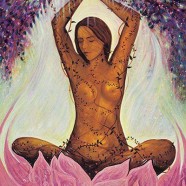
Alex and I connected for the first time around nine years ago and the reason we connected was around birth and midwifery. We are not quite sure where and when it was that we first heard of one another but I do remember hearing via various whispered sources about this brave young French woman who was living very simply on a very isolated farm in the Eastern Cape, South Africa, and who had chosen to give give birth unassisted to her first baby. (You can read the story of Alex’s second birth, also a free birth, outdoors in the Eastern Cape, here). Alex and I first chatted online. I was pregnant with my third child. We discussed our births and shared our dreams of one day becoming midwives. Alex was the first person to ever tell me about Lotus Birth and highly recommended I try this for my next birth. I imagined birthing in a room filled with scented flowers, visualising myself opening like a flower for the sun to birth my baby. I have to admit, I was slightly disappointed to find out that all a Lotus Birth required was not cutting the cord of the baby and waiting the 5-7 days for the cord to naturally fall off. Alex, along with her husband Yan, and their good friend Ole, pioneered the intentional community Khula Dhamma, initially founded on Vipassana principles. Over the years, our families met regularly, both in Cape Town and at Khula Dhamma and needless to say, Alex and my conversation would steer towards birth and midwifery. We shared our stories and experiences and always, we strongly resonated regarding birth and our implicit trust in women’s abilities to unlock (when given the opportunity) something deep and powerful within themselves. Four years ago, Alex and her family left South Africa and lived in Brazil for two years before finally settling in Portugal. Alex has been inviting me to come and visit for a long time and when she heard I was going to teach in Spain she invited me to come and teach some of the doulas in her area too. So after my ten-day teaching stint at De-a-luz in Spain, I traveled on three busses to the Algarve in Portugal. So this last weekend, doulas from Portugal came and we discussed mostly our experience of birth(amazing how birth-y people never seem to tire of this subject!), spoke about creating the optimal environment for a a fetus ejection reflex and physiological birth, and learned some skills around resuscitating babies as well as some basic but essential obstetric emergency skills. The question was asked as to why these would be skills a doula should learn since a doula’s role is to provide non-medical support to the mother. The answer is quite simple: The World Health Organisation states that one million babies die each year from birth asphyxia (an inability to breathe at birth) and recommends that every birth have an attendant skilled in neonatal resuscitation. If you are attending births regularly, you may find yourself in a situation where a baby is not breathing, or where a mother is bleeding more than usual, or has a prolapsed cord…You may be alone with her, or you may be at a home birth with a midwife, or driving in a car, or even be in a hospital. You may be the only one who can deal with that situation right then and there before the mother and baby can be transported to hospital, or you may need to assist, or you may just need to support a mother and her family during...
Read MoreUnder the Shade of an Olive Tree, Midwives Gather in Spain

Firstly, it’s bloody hot here at Da-a-Luz. That I have to say. Dry, sweltering heat that leaves you sweating at the slightest movement once the sun is up. Yummy food sourced mainly from the local gardens and surrounding farms, goat’s milk, cheeses, honey, pears, aubergines, watermelons, zucchini, olives and olive oil. So good. I sit, writing this by candlelight in the caravan I am staying in…the sun has finally set and with it a bit of cool and the sounds of the crickets descend. I have just returned from collecting water from the spring with midwife Fiona and student midwives Hannah and Jennifer…we also cooled our feet after a long day of neonatal resuscitation training. For the past week, midwives and student midwives have gathered on cushions under the shade of an olive tree, sharing their stories, fears, hopes, dreams and hopes of births for the women they serve. And themselves. One thing is clear: midwives are frustrated at the state of how births are run in this world. They are shocked and angry at the soaring caesarean and intervention rates. When was it that institutions became the places to manage and control this mostly straightforward and holy life event? What I have learned is this: – get a bunch of midwives together and they will find endless birth related things to talk about, debate and discuss, from the complicated to the ecstatic, from the outrageous to the most undemanding. Sharing techniques, pearls of wisdom and skills. And midwives do not seem to grow weary of this subject either. But midwives and midwifery students feel tired and defeated too. Innately, they believe in women’s ability to give birth to their babies, but many midwives are tired of fighting against the systems that constantly claim this right. But there is something truly magical and inspiring that happens when midwives are given the time to get together and share and support one another in this time old profession they hold so dear. It is as though the little spark of hope that sometimes feels that it may be dying is fanned by the love and strength of other birth keepers. If there is anything I can recommend, it is for midwives to regularly gather to share in a non-judgemental setting. At the end of the day, we all want the same thing. Safe, empowering, beautiful births for the mothers and babies we serve....
Read MoreMidwifery in Spain

For the next ten days, I will be teaching at De La Luz in Spain. So far I have met and gotten to know the two midwives Fiona (from the UK) and Nina (from Germany) who reside here, as well as the Dutch student midwife Anne – who has built a beautiful clay home for herself already in the less than one year she has been here. They have all been living here for close to a year attending the course that has been taking place here. I have not yet met the three student midwives who are traveling from the UK for their ten-day placement. It is very hot at the moment and it is light until late at night. De La Luz is made up of ramshackle homes – caravans, tents, trucks, busses, domes, yurts, etc. The picture here is the school they are busy building…it seems much bigger when you actually see it. And quite beautiful. As you can see, it is still unfinished. They are busy raising funds to complete it. So for now, classes take place on a circle of cushions under the shade of an olive tree. Will keep you...
Read MoreWhat Does Midwifery Mean to you?

Midwifery means seeing each woman for who she is and really seeing her, seeing that spark in her when even she cannot sense it.
Read More