


What Does It Mean to Be a Midwife Today?
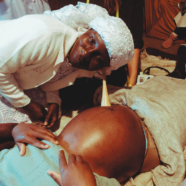
I’ve been travelling and mostly unplugged these past weeks, but I keep dipping back into the True Midwifery online community to feel its pulse. And every time, I’m reminded how rare it is to find a space that runs on love, trust, and discernment. It’s not that we all agree. Far from it. We come from different trainings, traditions, and ways of working. But there’s a deep respect for one another’s paths — and in the birth world, that’s something precious. Lately, our upcoming Study Spiral has stirred up some big feelings for me around the topic of modern-day witch hunts. And I keep coming back to this: so often, they are about women not trusting each other. Turning on each other to feel safe, or to keep our footing in a system that doesn’t truly support us. In birth work, it’s the same old pattern — patriarchy’s favourite trick: divide and rule. The Splintering of Our Roles One way this shows up is in the way we’ve created countless “safe” titles so we can be allowed to serve mothers and babies. Birthkeeper. Doula. Traditional Birth Attendant. Once, all of these roles were simply what it meant to be a midwife — a person who stood beside the mother and baby through the threshold of birth. Now, we’ve been split and split and split again. With every division, we’re more restricted, more regulated, more over-specialised… and less able to offer the full, holistic care mothers and babies actually need. A Lesson from the Anamaboya I was reminded of this when I sat with the Anamaboya — the traditional Shona midwives in Zimbabwe. I shared with them the different titles we see nowadays, and they looked at me with quiet confusion, as if I’d just asked for a different word for love, or for water. “What do you call yourselves?” I asked. “Anamaboya,” they said simply. Midwife. Grandmother. Their qualification? Being called to the work by God. A dream.Their gift? Deep humility. Trust in birth. A willingness to learn. The knowledge that their true work is to love the mother. Who Decides? Not long ago, an empirical midwife I met offered me a definition I’ve been holding close: A midwife is a midwife when recognised as such by her community. It’s such a simple sentence, and yet it pulls at so many threads — identity, authority, recognition, belonging. For me, this is not about deciding on one definition. It’s about opening the conversation and letting the questions breathe: Who gets to decide what a midwife is?How does language include… and exclude?And how might our own divisions be keeping us from serving mothers and babies as fully as we could? I’d love to explore these questions together in our upcoming Study Spiral. With love,Ruth Join this month’s Spiral → true-midwifery1.teachable.com/p/true-midwifery-study-spirals Last Spot in the Birth First Aid Course (starting 2...
Read MoreReturning Home with Salt in My Hair and New Seeds Planted

After a meaningful trip to Spain, I’ve just arrived home—blessed with a stretch of warm weather that gently welcomed me back. The heat of early Spanish summer is still lingering in my body, but the cooler air has helped soften the transition. My time in Málaga was precious. The Birth First Aid course we held there was small, intimate, and deeply connecting. I felt that we weren’t just learning skills, but weaving threads of something much larger—something that may blossom into future collaborations and community roots. Before heading home, I took my first-ever swim in the Mediterranean. As I floated in that salt-laced water, I imagined it absorbing into my skin like a protective layer of amniotic fluid from Mother Earth—a sacred cloak for the journey home. Breech as a Variation of Normal: A Study Spiral The first birth my mother ever attended was a breech birth. It was the experience that sparked her path as a local birthkeeper and wise woman for the women in our community. Years later, when I was 28 weeks pregnant with my second daughter, I was told at a routine hospital check-up that she was breech—and that I would need a caesarean. I was shocked.“What?” I exclaimed. I’d never heard of this variation of normal being met with such rigidity and invasive intervention. With time, support, and gentle encouragement—using inversions and homeopathics—my daughter turned head-down at 36 weeks. She was born sunny-side up at the Southern Spring Equinox, a radiant and powerful entrance. These experiences will guide our next Study Spiral on 26 June, where we’ll explore breech birth as a variation of normal. I’m honoured to be joined by wise woman Joy Horner, whose presence is sure to ground and inspire us. Learn more or book your place here The Self Sufficiency in Childbirth Course – Begins 3 July This 4-week online course was born in response to a deep call from our community:A longing for a space where pregnant couples can truly connect, explore, and prepare for autonomous, soulful birth. This isn’t just another antenatal class. It’s a guided journey of self-inquiry, awareness, and connection—where your inner knowing is honoured, and your questions are held with care. We’ll explore topics such as: What self sufficiency in childbirth means to youAligning as a couple during this transformative timeProtecting your birth space and making empowered choicesEngaging with systems (when needed) with clarity and strengthSharing stories, learning birth basics, and weaving community Limited to 6 couplesLive Zoom sessions on Thursdays: 3, 10, 17 & 24 JulyRecordings available for a month afterwards€240 / $250 USD / £205 / R2500 per couple Book your place hereQuestions? Write to us at truemidwife@gmail.com Birth First Aid: Blossoming with Every Circle After hosting two Birth First Aid workshops in Europe, I feel newly inspired by this ever-evolving offering. What I love most is how each person brings something of their own—how each session feels like a living organism, shifting and growing with every new group. As we prepare for the next online series, I feel excitement and curiosity for who will gather this time—and what wisdom will unfold. Join the next course Thank you for being part of this ever-growing circle. Whether you’re walking beside us already, or feeling the pull to join, you’re held with warmth and reverence. With love,Ruth True...
Read MoreHolding Death as Birthkeepers

“…if you are a birth keeper, you must also be a death midwife. If you support people to enter the earth realm, you must also become a midwife for those who pass on.” – Dr Mmatshilo Motsei The first time I ever saw a dead body it was a baby. I was 9 years old and we had very recently made the move to the farm. The little girl had been born on the drive to the hospital after her mother had gone into labour on Christmas Eve. She had emerged whilst the bakkie (the pick up truck) was winding down Gydo pass, to the town of Ceres. She had lain, wet and alone, at her mother’s feet and had begun to grow cold. By the time they had reached the hospital she was no longer breathing. (You can read AN’NOOI’S BIRTH STORY here) At the funeral, which was held in the bushman graveyard on the farm, her father unscrewed her little coffin for us to all see. The coffin was no bigger than a shoe box. She was perfect. Beautiful. Angelic. I will never forget her face and her little fingers. Her little body dressed and swathed in silken white. She looked like she was asleep… There was something so pure, so innocent about this death. Her mother sobbed at her graveside whilst the rest of us looked on not knowing what to say. My mother had been asked to oversee the funeral, she wore a big sun hat and read from the Bible. The women began to sing as the tiny coffin was covered in sad and red clay soil. Assie verlossers huis toe gaan Assie verlossers huis toe gaan Oh Here help my dat ek kan saam gaan Assie verlossers huis toe gaan (When the saviours return home When the saviours return home Oh Lord help me, that I may return with them When the saviours return home) ——————————————- Birth should be about life shouldn’t it? And yet, as Mmatshilo’s quote illustrates, we cannot work in the realm of birth without knowing that death walks along this life giving force as well. “We come from spirit, come from light, shining in the stars at night” – Martyn John Taylor (SHINE) The fact that birth and death carry a similar energy became evident to me after I experienced the massive loss of having my mother, my sister and my step father wrenched from this life. Whilst I grieved, I also noticed the familiar tenderness that comes with the thinning of the veils, the sensitivity, the vulnerability, the same openness that I had carried after giving birth. BIRTH AND DEATH ARE INFINITELY INTERTWINED It is very difficult to talk about and face death when it accompanies birth. And yet it is a conversation that needs to be had. How do we hold Death as birth attendants, birthkeepers, as space holders for birth? I am not sure that I have the answers … but I do my best to initiate conversations and to create safe spaces for us to explore these topics that are so emotive and important in this work. The following True Midwifery online offerings will explore this topic in depth and from different perspectives, in a safe and held container and within a beautiful community: 25 July 2024 – STUDY SPIRAL: Holding Grief and Loss in Pregnancy and Childbirth with Nadia Maheter 4 September 2024 – 15 January 2025 – Birth First Aid for Mother and Baby 14 November 2024 – 13 November 2025 – Silent Birthkeeper: One Year Immersion into True...
Read More