


Birth First Aid: Roots, Trust, and Preparedness

We are three weeks away from starting the next cycle of the Birth First Aid for Mother and Baby and I find myself wanting to speak to where this course actually comes from. Not in terms of curriculum or structure, but in terms of roots. From the age of 8, I was raised in a rural, mountainous part of South Africa, far from towns, hospitals, and easy access to help. We lived without electricity or hot water, and “making a plan” was simply part of daily life. My mother, a farmer and a self-taught rural traditional midwife, was my first teacher. Part of her work revolved around growing herbs, preparing natural medicines, and offering care to the local community. Birth happened quietly, often in the background of everyday life. Sometimes in the middle of the night, and then life simply went on. To be honest, it wasn’t something we, as children, paid close attention to. It was simply part of the landscape we grew up in. Women trusted my mother to sit with them while they birthed their babies, and this trust felt natural and unremarkable at the time. Birth wasn’t feared. It was accepted as a normal part of life. My mother had a still, calm, and deeply accepting presence. The women she supported often spoke of her quiet nature and her healing hands. And although much of this was absorbed unconsciously, it shaped something fundamental in me: a sense that birth, when held with trust and respect, usually unfolds as it should. Later, as a birth attendant myself, I experienced those rare situations where a baby struggled to breathe, a mother lost more blood than expected, or a birth asked something extra of those present. These moments taught me that preparedness does not need to mean fear, and that calm, grounded response is very different from panic. This understanding was later deepened through my work teaching Helping Babies Breathe and Helping Mothers Survive in African hospital settings. These experiences reinforced that even in moments of urgency, calm presence and simple, well-understood responses matter more than fear-driven reaction. This is the soil from which the Birth First Aid course that I now offer grew. The course is not about anticipating disaster or turning birth into a clinical event. It is about cultivating steadiness, discernment, and confidence. Knowing when to trust the process, and knowing how to respond when gentle, respectful support is needed. Birth isn’t about fear. It’s about trust. And when we hold birth with trust, and pair it with simple, well-understood first aid skills, we create safer, more held spaces for mothers and babies, without unnecessary intervention. If this way of approaching birth speaks to you, you’re warmly invited to read more about the course and its upcoming cycle...
Read MoreTHE BASIC NEEDS OF THE NEWBORN
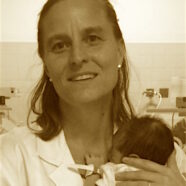
Listening at the Threshold of Life There is a moment, just after birth, when everything is still tender, open, and profoundly alive. The newborn is adapting to life outside the womb.The mother is adapting to life with her baby in her arms.Both are exquisitely sensitive to their surroundings. How we meet this moment matters. The first hours and days after birth are not simply a time of transition; they are a time of imprinting. What is felt, sensed, and experienced here echoes forward: into bonding, regulation, health, and our capacity to meet the world. When we speak about the basic needs of the newborn, we are not speaking about techniques or protocols. We are speaking about conditions. About atmosphere. About the quality of presence offered around new life. In this reflection, we turn toward a simple yet radical orientation:zero separation and zero interruption. ––––––––– LISTENING THROUGH THE LENS OF MONTESSORI AND ODENT Looking through the lens of Maria Montessori and Michel Odent, we are invited to reconsider what care truly means in the earliest moments of life. Montessori understood that birth and early life must be protected, not managed. She spoke about the newborn as a “spiritual embryo,” a being in a profound state of formation, deeply affected by the environment into which they arrive. Privacy, warmth, continuity, and calm were not luxuries, but basic needs. Michel Odent later articulated this understanding through the language of physiology and Primal Health. He showed how early experiences shape the interaction between the primal brain, the hormonal system, and the immune system: systems that guide us for a lifetime. High levels of stress and interruption in the early hours after birth can have lasting effects on bonding, regulation, and health. Both Montessori and Odent remind us of something quietly challenging:any unnecessary help can become an obstacle. ––––––––– THE NEED FOR SAFETY, SERENITY, AND SILENCE The most fundamental need of the mother and newborn is to feel safe. Safety allows the body to soften.Serenity allows hormones to flow.Silence allows adaptation and bonding to unfold. After birth, both mother and baby are recovering from an immense physiological and emotional passage. They are learning each other. Their senses are heightened. Their nervous systems are open and impressionable. When the space around them is filled with noise, conversation, observation, or subtle interference, energy is pulled outward. When the space is quiet, respectful, and restrained, energy can turn inward: toward healing, connection, and rest. Silence is not emptiness.It is an offering. It allows mother and baby to reconnect after an abrupt separation. From this reconnection, everything else flows. ––––––––– LEARNING WITH KARIN SLABAUGH This work is at the heart of the teaching shared by Karin Slabaugh, who has dedicated her life’s work to studying, guarding, and protecting the newborn. Karin brings together Montessori’s original insights with decades of lived experience and careful observation, bridging traditional wisdom with contemporary understanding. Her work is grounded, humble, and deeply respectful of the newborn as a sensitive, relational being. Karin and I collaborate closely on the Basic Needs of Babies work, and it is a deep honour to walk alongside her in exploring how we meet life at its very beginning. You can learn more about this shared work here:https://www.montessori-for-life.org/the-basic-needs-of-babies/ ––––––––– A QUIET INVITATION When we change how we meet the newborn, we change something fundamental, not only for individual families, but for the wider culture. This reflection is an invitation to listen more closely.To protect the earliest moments of life.And to remember that sometimes the most powerful care we can offer is silence, trust, and reverence. ––––––––– This session is...
Read MoreClosing the Bones of 2025, Opening the Spiral of 2026

As this year draws to a close, I find myself reflecting on what it has meant to move through 2025 together, not just in content, but in relationship, presence, and shared inquiry. Our final Study Spiral of the year, Closing of the Bones & Honouring Lineage, arrived as a fitting threshold. It felt like a conscious closing of the bones of the year itself, an invitation to gather what has been lived, learned, and felt across the Study Spirals, and to allow it to settle. Closing of the Bones is an ancient rite found in many cultures, most widely recognised through Latin American traditions and the use of the rebozo. In our final gathering, we explored it not as a technique, but as a rite of passage, one that supports integration after birth, loss, illness, initiation, or profound life change. A central thread of the session, and of the year as a whole, has been lineage and integrity. We reflected on the responsibility that comes with receiving and passing on ancestral knowledge, and on how ancient wisdom can live in modern contexts without losing its soul. As the spiral widened, we spoke about rites of passage across the lifespan and the deep human need to be witnessed and held in community. What emerged clearly was this understanding: these thresholds are not meant to be walked alone. As I close the bones of 2025, I feel deep gratitude for this community, for the way it continues to flourish, nourish, and grow with each spiral. Thank you for the depth, care, and presence you bring. At the same time, I am quietly delighted to be opening the next turning of the spiral. The 2026 True Midwifery Study Spirals The 2026 Study Spirals will unfold as thirteen monthly gatherings held across the year. Together we will explore newborn care, reproductive health, birth justice and legal terrain, grief and creativity, elderhood, herbs, freebirth, and the reclamation of midwifery, always held within an intentional, respectful, global container. You can view the full 2026 schedule and details here:https://true-midwifery1.teachable.com/p/true-midwifery-study-spirals-2026 As we move toward the solstice and the festive season, True Midwifery will be entering a summer pause from 19 December to 19 January, honouring the seasonal rhythm here in South Africa. I am trusting this time of rest and integration, and looking forward to returning in the new year, ready to gather...
Read MoreReflections on Our Study Spiral Honouring Michel Odent

Last week’s Study Spiral, Peace on Earth Begins at Birth, was one of those gatherings that quietly settles into the bones. Days later, I am still carrying the tenderness and the sense of profound connection that arose as we came together to honour the life and legacy of Michel Odent, a man whose work has shaped, guided, and challenged so many of us walking the path of True Midwifery. There are moments in this work that feel like thresholds, where something subtle shifts in the collective field. This Spiral felt like one of them. A Visit From Liliana The most moving part of our time together was the presence of Liliana, Michel’s partner in life, birth, and death. With an honesty that was both steady and fragile, she shared a recent birth she attended, a story woven with sensitivity, intuition, and that unmistakable presence of someone who has lived and breathed birth for decades. She also spoke about the tenderness of Michel’s passing, her own grieving, and the intimacy of accompanying someone you have walked beside for so long. Her words did not come as teaching, but as transmission: a kind of living echo of Michel’s essence. We became, without needing to try, a circle of elephants, quietly standing with her, holding her experience, her remembering, and her love. In that moment, the Spiral became what it always hopes to be:a place where wisdom meets humanity, and where our collective holding becomes a form of care. The Lineage of Love and Attention One of Michel’s most important teachings — and one Liliana echoed — is this: “Birth is a story between two people — the mother and the baby.” It’s such a simple sentence. And yet, in a world where birth has become increasingly technologised, politicised, and crowded with opinions, this truth feels more radical than ever. The mother.The baby.Two nervous systems finding each other.Two bodies completing an ancient dance. Everything else is secondary. Our Spiral felt like a return to that simplicity, not in a nostalgic way, but in a deeply embodied, grounded way. A remembering of what is actually essential. Continuing Michel’s Care After the session, I reached out to thank Liliana and asked whether there was a charity or cause that reflected Michel’s values, something to which we could donate the proceeds of the gathering. Her answer surprised me with its sweetness. She told me that Michel had always been especially protective of the birds and squirrels in their neighbourhood in London. Feeding them was a daily ritual of kindness. She still continues this small act on his behalf. She suggested we donate to London Wildlife Protection, a local organisation that cares for urban wildlife. And so, in honour of Michel, that is exactly what we will do. I find something beautiful in this:that our Spiral community, gathered in his name, will help feed the birds and squirrels he loved. A simple, humble continuation of his care. An Invitation Into Our Final Spiral of 2025 As we close this year of Study Spirals, a year rich with learning, remembering, and returning to the roots of our craft, we have one final gathering remaining. And it is a special one. Closing the Bones with Jodi Jade In December, we welcome Jodi Jade, who will guide us into the lineage, history, and deeper purpose of the Traditional Mexican Closing of the Bones ceremony. This Spiral will be an exploration of: the origins of the Rebozothe wisdom of rites of passagehow ritual restores what modern life often fracturesthe variations and deep healing potential of Closing the Bonesand the essential elements of postpartum care and community holding It feels like...
Read MoreCarrying the Thread: A Soft Tribute to Michel Odent
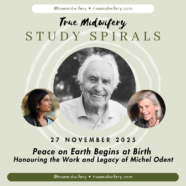
As I prepare for my talk this coming Thursday, Peace on Earth Begins at Birth — Honouring the Work and Legacy of Michel Odent with Ruth Ehrhardt and Clara Scropetta, alongside my friend Clara Scropetta, I am filled with tender emotion.
Read More